Smart Fridges Automate Expiration Tracking for Less Waste
Smart refrigerators redefine kitchen management by automatically monitoring expiration dates. These appliances, once considered luxury items, now serve as practical tools for households. They combine cameras, sensors, and artificial intelligence to identify groceries, issue freshness alerts, and propose meal ideas. This integration fosters sustainability, cuts costs, and eases daily planning in connected homes.
Understanding Household Food Waste
Households discard substantial amounts of food each year due to overlooked expiration dates. Surveys indicate that up to 40 percent of purchased groceries go uneaten, leading to financial losses and environmental strain. Manual tracking through lists or apps often fails amid busy schedules. Smart refrigerators address this gap by providing reliable, automated oversight.
Mechanics of Automatic Expiration Monitoring
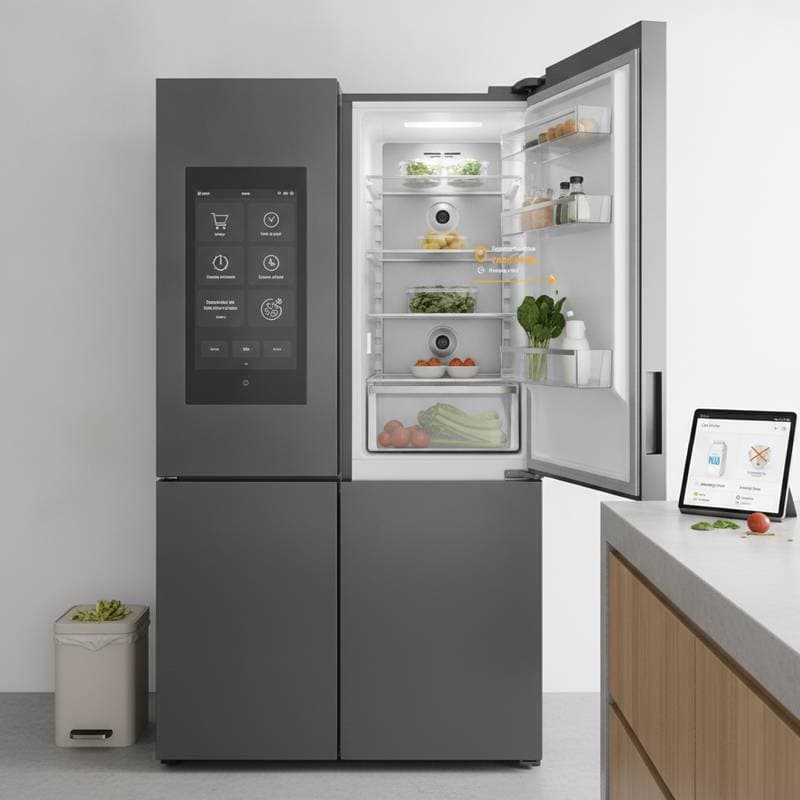
Internal cameras capture images of items as users place them in the refrigerator. Software analyzes barcodes or employs image recognition to catalog products against a database of shelf lives. Integration with shopping apps or receipt scans updates the inventory without manual input. The system then delivers notifications, such as via a smartphone app, when items approach their use-by dates.
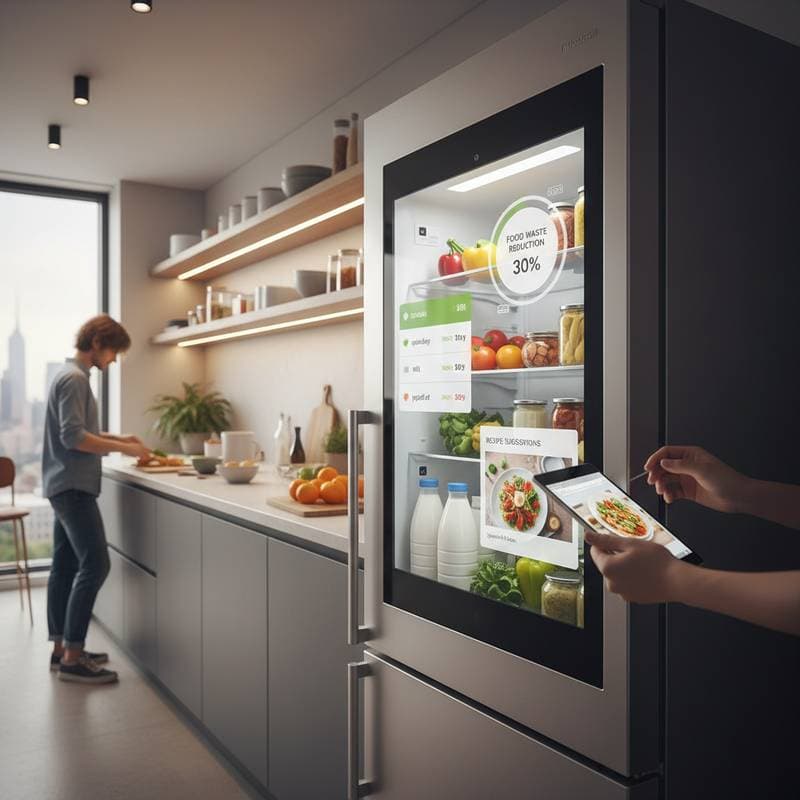
Advanced models feature touchscreens that list contents with color-coded freshness status. Users view details like "Milk expires in two days" alongside compatible recipes. This setup shifts grocery oversight from a task to an effortless routine, ensuring items receive priority in meal preparation.
Expanding Capabilities in Food Management
Beyond basic tracking, smart refrigerators generate recipe recommendations from available ingredients. They compile shopping lists based on consumption patterns and link to online retailers for automatic restocking of staples like bread or dairy. These functions promote precise purchasing, reducing overbuying.
Consider a scenario where the refrigerator detects expiring tomatoes and suggests a salad recipe using existing greens and dressing. Families transform potential waste into nutritious meals. Such guidance builds habits of intentional use without added effort.
Artificial Intelligence Enhances Item Recognition
Machine learning powers the identification process, adapting to user-specific patterns over time. The system refines predictions; for instance, if produce spoils faster in a warm climate, alerts adjust accordingly. Initial scans improve accuracy through repeated exposure to common items like fruits or packaged goods.
Manufacturers update databases with collective user data to boost recognition rates. Even barcode-free items, such as loose vegetables, benefit from visual analysis. This personalization ensures reminders align closely with real-world conditions.
Seamless Connections in Smart Home Networks
Smart refrigerators integrate with other devices to streamline kitchen workflows. A link to a smart oven verifies ingredient availability before preheating for a selected recipe. Voice assistants enable queries like checking expiring items hands-free during cooking.
This ecosystem coordinates actions across appliances, minimizing errors in meal preparation. Users experience a unified interface where the refrigerator shares data with lights, speakers, or inventory trackers. The result is a kitchen that anticipates needs proactively.
Achieving Waste Reduction with Proactive Alerts
Targeted notifications increase awareness of inventory status, prompting timely use of items. Pilot studies show users reduce food discards by 30 percent after implementing these systems. Recipe integrations further extend usability, turning alerts into practical solutions.
Environmentally, lower waste decreases the demand on resources like water and energy in food production. Households contribute to broader sustainability goals through small, consistent actions. Financial benefits accrue as savings compound over months.
Navigating Data Privacy in Connected Appliances
These devices gather details on purchases and usage to function effectively. Manufacturers implement encryption and user-controlled settings to safeguard information. Options for local storage prevent unnecessary data transmission to external servers.
Consumers weigh benefits against risks, often prioritizing features that deliver value. Clear policies outline data handling, empowering informed choices. This balance maintains trust in the technology.
Practical Implementations from Leading Brands
Samsung's Family Hub series employs internal cameras to snapshot contents upon door closure, accessible remotely via app. LG's InstaView models use AI for barcode-free recognition of produce and dairy. Whirlpool integrates with delivery services like Instacart to sync orders directly into the inventory.
These innovations emphasize user-friendly automation. Setup involves initial calibration, followed by passive operation. Regular software updates enhance performance without user intervention.
Benefits for Everyday Users
The technology simplifies routines for diverse households. Parents receive alerts for school lunch ingredients, avoiding last-minute rushes. Professionals automate list creation, aligning with erratic schedules. Home cooks explore recipes that maximize existing stock.
Adoption grows as interfaces become intuitive, requiring minimal learning. The focus remains on enhancing enjoyment in food preparation rather than adding complexity.
Overcoming Current Limitations
Premium pricing positions smart refrigerators as investments, though costs decline with market expansion. Interoperability varies; select models pair best with specific ecosystems like Google Home or Alexa. Industry standards evolve to bridge these divides.
Recognition accuracy improves via user corrections, such as adjusting shelf life for custom items. Feedback loops refine algorithms, addressing variables like storage conditions. Persistent refinement ensures reliability.
Embracing Efficient Kitchen Dynamics
Adopting a smart refrigerator shifts focus from tracking to creativity in cooking. Users develop cycles of shopping based on actual needs, fostering fresher meals. The appliance acts as a reliable ally in maintaining organization.
Long-term, this leads to habitual efficiency. Households report less stress around groceries and more time for shared dining experiences.
Advancing Sustainable Meal Practices
Smart expiration tracking paves the way for reduced household waste through intelligent automation. It encourages fresher eating, cost savings, and eco-conscious choices. As capabilities advance, kitchens evolve into hubs of practical innovation, benefiting users and the planet alike.