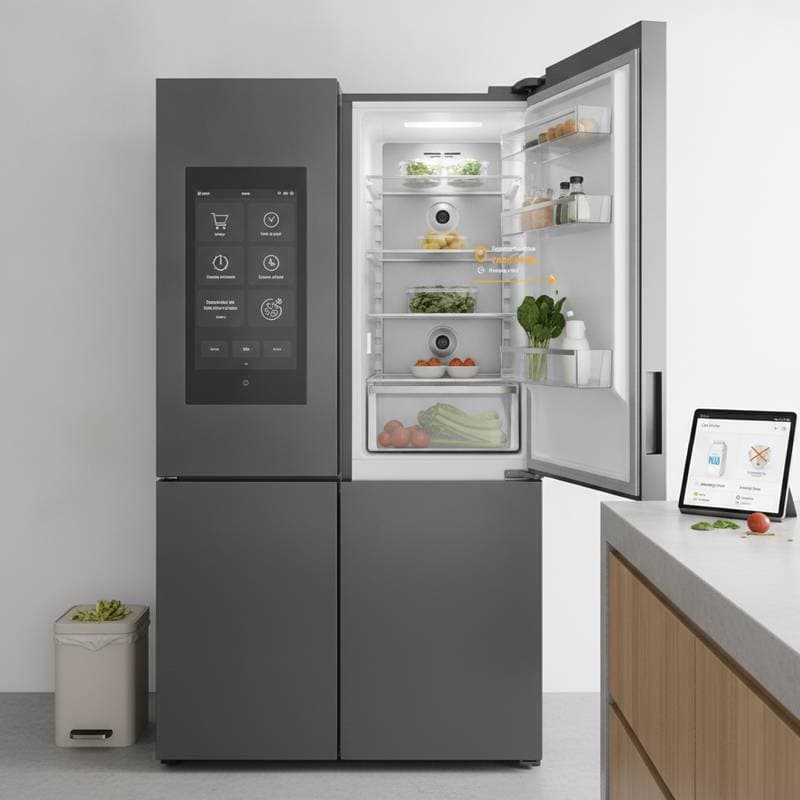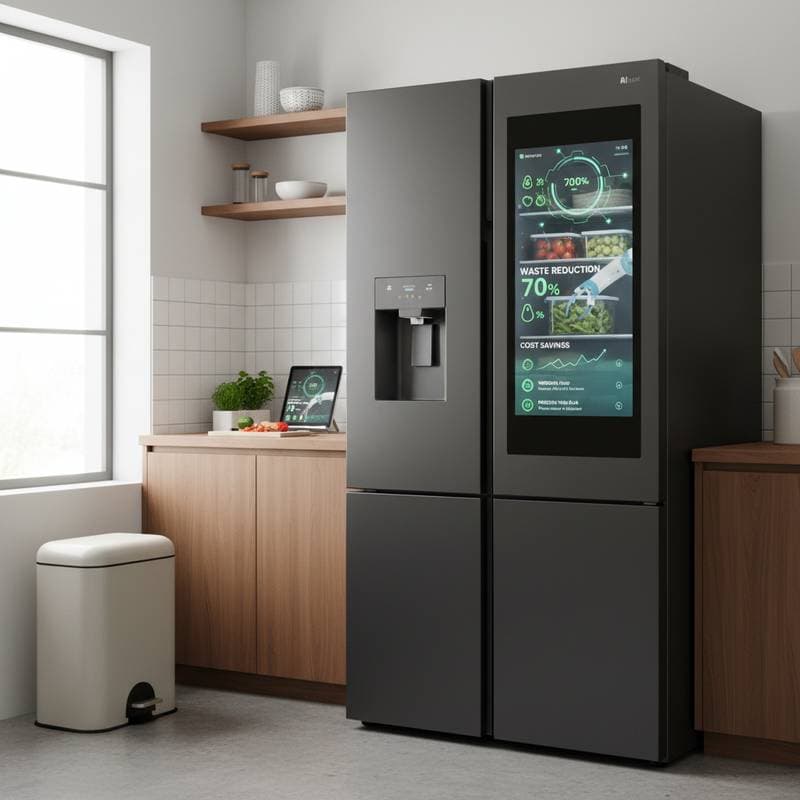
AI Fridges Reduce Food Waste by 70% by 2026
Smart homes evolve from mere convenience to conscious efficiency, with the kitchen at the forefront of this transformation. Next-generation refrigerators connect not only to smartphones and grocery services but also to user behaviors. These AI-driven devices analyze eating patterns, shopping frequency, and tendencies to overlook leftovers. Industry projections indicate they will decrease household food waste by as much as 70 percent, converting a primary area of inefficiency into a benchmark for resource optimization.
Addressing the Kitchen Food Waste Challenge
Food waste represents a chronic issue in domestic settings. Research reveals that families discard substantial portions of purchased groceries weekly due to inadequate planning, overlooked items, or misinterpretation of expiration dates. This results in billions of dollars in financial losses and considerable environmental impact. Although composting and disciplined shopping mitigate the problem, these methods depend on consistent human effort. A more effective approach automates the process entirely.
AI refrigerators tackle this issue proactively. They integrate internal cameras, sensors, and machine learning algorithms to monitor every item entering and exiting the unit. These systems identify produce types, assess freshness levels, and issue alerts for items approaching spoilage. Consider it a dedicated kitchen manager that maintains awareness of contents on every shelf without fail.
Enhancing Inventory Management and Budget Control
Picture accessing your refrigerator and viewing an instant digital inventory of contents, including freshness status and potential meal combinations. AI refrigerators deliver this capability seamlessly. Through ingredient recognition and barcode scanning, they update records automatically, eliminating the need for manual logging.
Beyond organization, this functionality shapes purchasing decisions. Studies by retail experts demonstrate that homes using connected kitchen tools avoid redundant buys and execute more targeted shopping trips. The refrigerator generates shopping lists for depleted items and integrates with delivery platforms for effortless reordering.
For instance, prominent appliance manufacturers link their devices to leading grocery networks. These systems observe usage trends and forecast needs for staples such as milk or eggs. Users avoid shortages or excess inventory, maintaining stock equilibrium while controlling expenditures.
Implementing Predictive Meal Suggestions
A standout advancement lies in predictive meal suggestions. AI refrigerators go beyond inventory tracking to propose cooking ideas. By evaluating available ingredients alongside user dietary preferences, they recommend dishes that utilize existing stock before spoilage occurs.
This innovation benefits time-strapped households and working individuals facing meal preparation hurdles. Rather than pondering uses for a partial vegetable, the system might propose a specific recipe like a vegetable stir-fry, including a list of required additions for the upcoming shop.
Appliance developers now offer companion applications that foster integrated kitchen environments. Over time, these tools adapt to individual cooking habits and preferences, delivering increasingly tailored guidance. Cooking shifts from a routine task to an intuitive, customized process.
Clarifying and Extending Food Freshness
Expiration dates often confuse consumers, leading to premature discards due to uncertainty about storage duration or label meanings. AI refrigerators eliminate this ambiguity by logging entry dates and continuously evaluating item conditions via sensors and imaging.
Specifically, the unit detects visual alterations in produce or spoilage indicators like ethylene gas emissions. It then provides precise notifications, such as "Strawberries approach peak freshness; incorporate them into meals today." Such detailed feedback prevents avoidable waste and fosters assurance in safe food utilization.
Experts in nutrition emphasize that accessible, trustworthy freshness information encourages intentional eating practices. With reliable data at hand, individuals plan meals more effectively around current holdings.
Advancing Sustainability via Intelligent Engineering
The advantages of AI refrigerators reach beyond personal use to broader ecological gains. Minimizing food waste conserves resources involved in production, packaging, and distribution. Projections suggest that broad implementation could save billions of gallons of water annually and substantially lower methane emissions from landfills.
Designers prioritize energy conservation as well. Advanced models employ adaptive compressors that adjust operations according to usage patterns. For example, the refrigerator optimizes cooling during extended door-closed periods, such as overnight. Paired with zoned temperature regulation, this approach yields dual benefits in environmental protection and utility cost reduction.
Navigating Challenges to Widespread Use
Obstacles persist despite the technology's potential. Initial purchase prices exceed those of conventional units, though savings from waste reduction and energy efficiency recoup investments over time. Device compatibility poses another hurdle, as not all systems interoperate smoothly. Collaborative efforts within the industry aim to establish universal protocols for seamless brand integration.
Data privacy concerns arise given the collection of consumption details. Established producers counter this with robust encryption and user-configurable sharing options. As confidence builds and costs decline, market penetration will accelerate.
Envisioning Tomorrow's Kitchen Dynamics
The fusion of artificial intelligence, sensing technology, and cloud integration expands refrigerator capabilities dramatically. Emerging designs may connect with health wearables to align meal ideas with wellness objectives. They could coordinate with home energy grids to schedule cooling during low-demand periods. In the long term, refrigerators will form nodes in autonomous food ecosystems that preempt user requirements.
Visualize a kitchen ecosystem where the refrigerator communicates with ovens, pantries, and suppliers. Leftovers receive automatic documentation, recipes adapt dynamically, and waste approaches zero. This vision moves from speculation to practical reality.
Embracing Intelligent Kitchen Upgrades
AI refrigerators herald an era of proactive home management. Consumers gain from streamlined grocery handling, effortless meal strategies, and diminished ecological impact.
When evaluating kitchen enhancements, prioritize interconnected devices with robust food oversight features. Seek units equipped with internal imaging, spoilage detection, and integrated recipe tools. These selections pave the way for responsible, forward-thinking living.